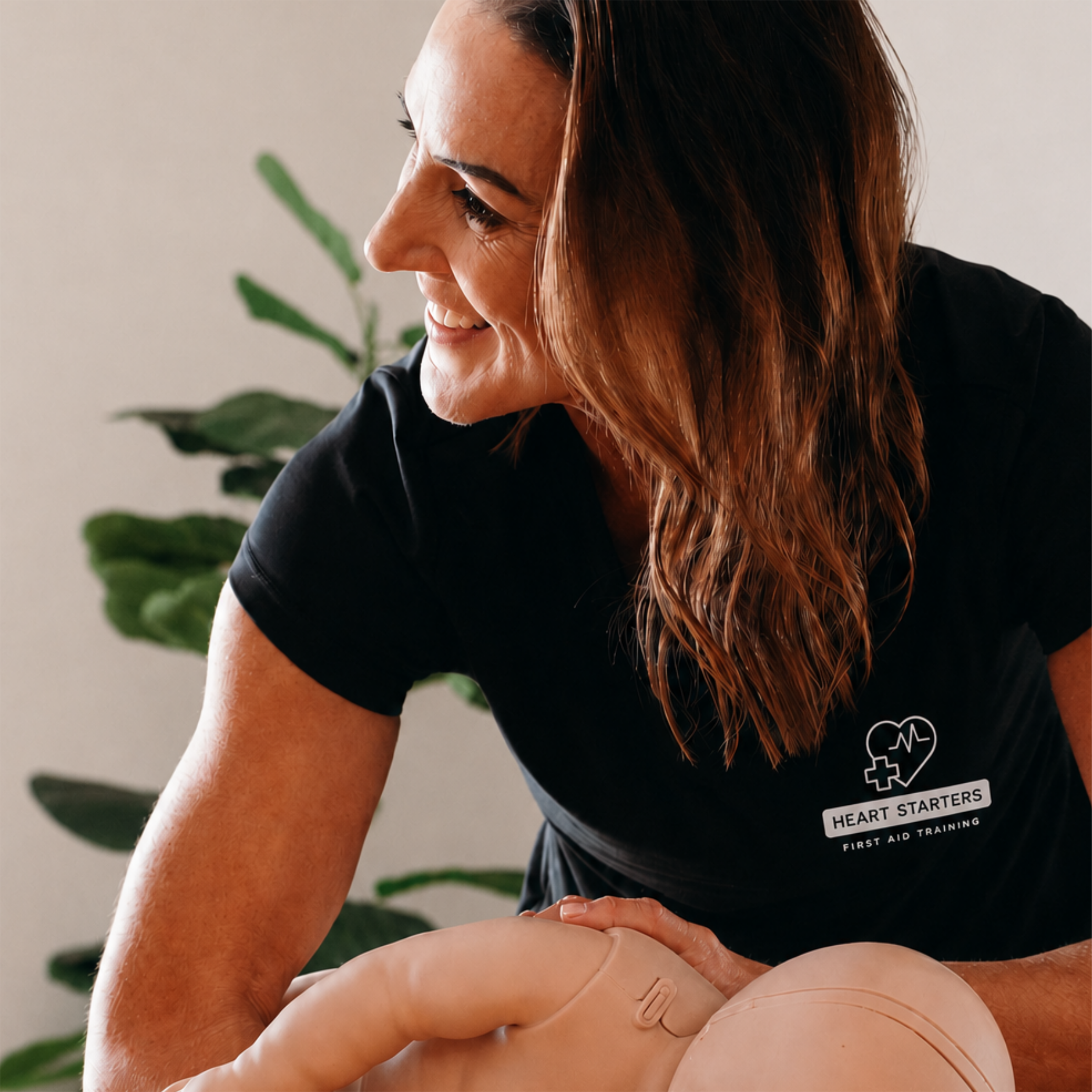
Skills you’ll practise in LVR and CPR
Low Voltage Rescue procedure
You’ll practise a practical rescue response that includes:
- Checking hazards and confirming it’s safe to proceed
- Isolating power where safe and possible
- Using insulated rescue equipment to pull the casualty clear
- Moving the casualty to a safe area for first response
CPR, AED and DRSABCD response
You’ll demonstrate:
- DRSABCD decision-making
- Adult CPR compressions and breaths
- AED set-up and safe operation
- Clear communication during a live-work emergency scenario
What’s in a Low Voltage Rescue Kit?
Kits vary by workplace, but commonly include:
- An insulated rescue hook/crook
- Insulated gloves
- A fire-resistant blanket
- A CPR mask/face shield
Training covers when to use the kit and how to handle it safely.
Duration and delivery
Most combined LVR & CPR options include:
- Self-paced online theory (often around 1.5–3 hours), and
- A face-to-face practical session (commonly around 3.5–4.5 hours)
Because you must demonstrate competency, LVR training can’t be completed entirely online.
Practical assessment requirements
To be deemed competent, you’ll need to complete:
- A simulated rescue from a low-voltage panel, and
- Two minutes of uninterrupted single-rescuer CPR (five cycles of 30 compressions to 2 breaths) on an adult manikin positioned on the floor
If you have a condition or injury that may affect kneeling or compressions, plan ahead before booking.
Ready to book LVR Training Mildura?
Pick the course option that matches your current tickets (LVR & CPR, LVR-only, or First Aid & LVR) and lock in a session that suits. Booking for a team? Ask about group or onsite delivery so everyone renews together and stays site-ready.